Most facilities prepare for equipment failure. Motors burn out. Sensors fail. Drives a trip. Those problems are expected. There are procedures for them. Electrical panel failure is different. It doesn’t show up as a single fault. It shows up as a system-wide disruption. One moment, everything is running. Next, entire sections of your operation are down with no clear starting point.
A plant manager doesn’t say, “The panel failed.” They say, “Why is Line 3 down, and why can’t we get it back up?” That’s the real issue. Electrical panels sit upstream of your operation. They control distribution, protection, and coordination across multiple systems. When something goes wrong inside the panel, it doesn’t stay contained. It spreads across circuits, machines, and processes. Now you’re not fixing a component. You’re chasing a chain reaction.
This is where pressure builds:
- production stops
- teams scramble to diagnose
- leadership wants answers
- downtime costs start stacking by the hour
For industrial facilities, this is one of the most disruptive failures you can face. And it often starts with small issues that go unnoticed until the system reaches a breaking point.
This article will walk you through:
- what actually fails inside electrical panels
- why those failures escalate into full shutdowns
- how to prevent issues before they take down your project
Because in this environment, reliability is not a bonus. It’s the baseline.
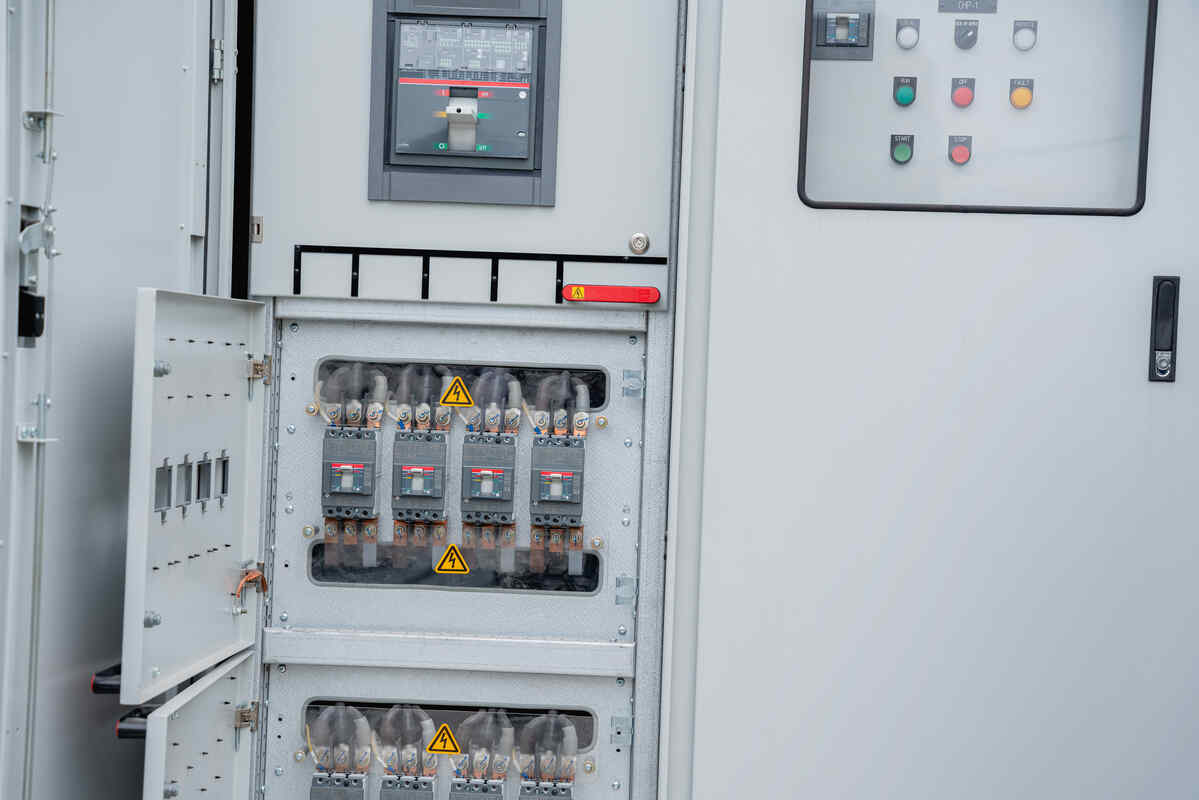
What an Electrical Panel Actually Does in Industrial Systems
Most people describe an electrical panel as a distribution point. That’s technically correct. It’s also incomplete. In an industrial environment, the panel is not just distributing power. It is controlling how your entire operation behaves.
Inside a typical panel, multiple functions are happening at the same time:
- Power distribution → directing electricity to different systems and loads
- Circuit protection → isolating faults before they damage equipment
- Motor control → starting, stopping, and regulating machinery
- Control logic integration → working with PLCs, relays, and automation systems
- System coordination → ensuring everything runs in the correct sequence
This is where things get critical. Your panel sits upstream of:
- production lines
- conveyors
- HVAC systems
- safety systems
- automation controls
It acts as the central hub connecting all of them. When a single machine fails, the problem is contained. You isolate it, repair it, and move on. When the panel has an issue, you lose visibility and control across multiple systems at once. That’s why panel problems feel different on the floor. It’s not:
- “This motor isn’t working.”
It becomes:
- “Why are three systems down, and why is nothing responding the way it should?”
From an operational standpoint, the panel is a dependency multiplier. Every system connected to it relies on:
- stable voltage
- proper load distribution
- accurate control signals
If any of those break down inside the panel, the failure doesn’t stay localized. It propagates. This is also why troubleshooting takes longer. You’re not just checking a component. You’re verifying:
- upstream power conditions
- downstream system responses
- control logic behavior
And all of that has to be done safely, under time pressure, often while production is already stopped. This is the reality: The panel is not just part of the system. It is the system’s control center.
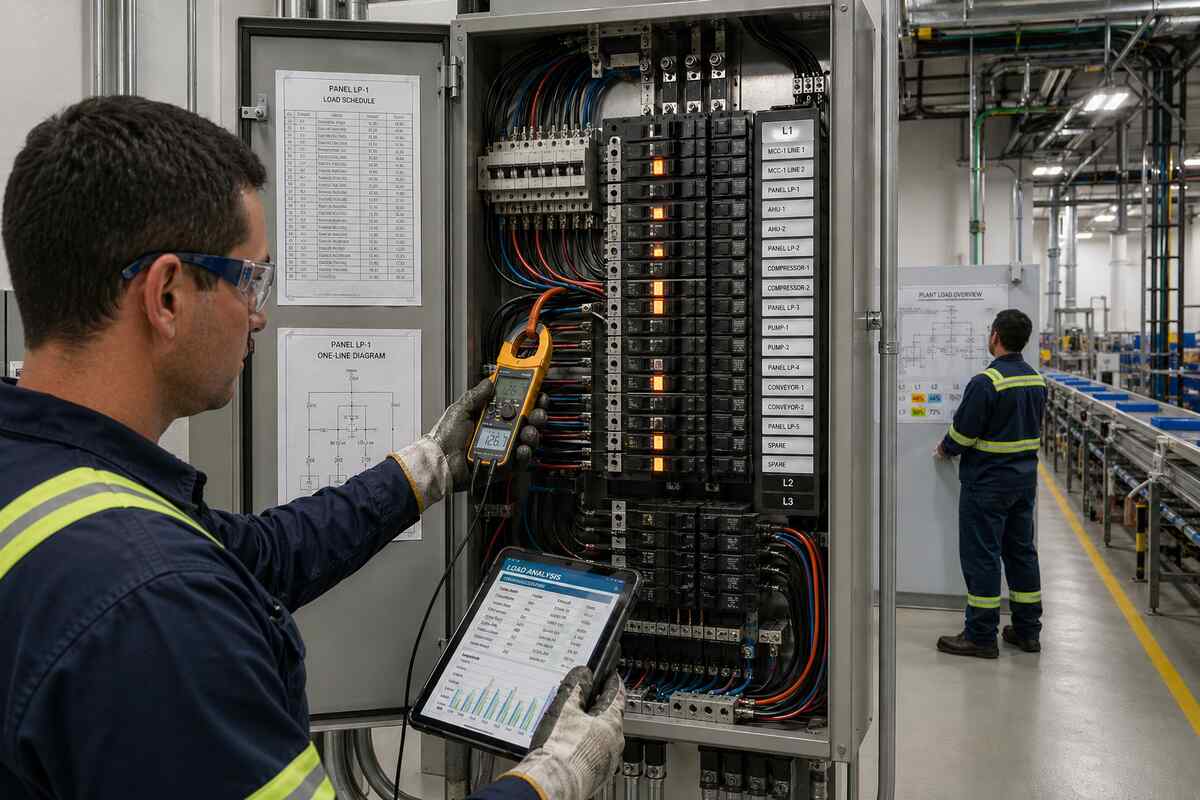
The Most Common Electrical Panel Problems
Most articles list problems. They say things like “overloading” or “loose wiring” and move on. That’s not useful when you’re standing on a production floor trying to figure out why systems are behaving unpredictably. What matters is not just what the problem is, but what’s happening inside the panel when it occurs and how that translates into operational disruption.
Overloaded Circuits
This is one of the most common and most misunderstood issues. On the surface, you see:
- breakers tripping
- inconsistent system uptime
- equipment shutting down under load
But inside the panel, the problem builds over time. Load demand slowly exceeds what the panel was designed to handle. It doesn’t fail immediately. Instead:
- conductors heat up
- breakers experience repeated stress
- thermal cycling weakens internal components
At some point, the system crosses a threshold. Now you get:
- frequent trips
- unstable voltage distribution
- cascading shutdowns when multiple systems draw power at once
This often happens in facilities that have expanded operations without upgrading panel capacity.
Loose or Degraded Connections
This is a silent failure point. You won’t see it during normal operation. But inside the panel:
- vibration loosens terminals
- oxidation forms on contact surfaces
- resistance increases at connection points
That resistance generates heat. Heat leads to:
- voltage drops
- intermittent faults
- damage to surrounding components
Eventually, what started as a minor connection issue becomes a failure under load. These problems are especially common in environments with constant vibration or temperature fluctuation.
Aging Components
Panels are often expected to run for decades. The problem is that internal components don’t age evenly. Over time:
- breakers lose sensitivity
- relays respond slower
- insulation materials degrade
The system still works, which creates a false sense of reliability. But under stress, aging components fail faster and less predictably. This is why older panels tend to fail during peak demand or unexpected load conditions.
Environmental Stress (Heat, Dust, Moisture)
Industrial environments push panels beyond ideal conditions. Inside the enclosure, you may have:
- dust accumulation restricting airflow
- moisture leading to corrosion
- high ambient temperatures accelerating wear
Even with rated enclosures, long-term exposure creates risk. Heat is the biggest multiplier. As the temperature rises:
- resistance increases
- components degrade faster
- failure thresholds drop
What should have been a stable system becomes sensitive and unpredictable.
Poor Panel Design or Unplanned Expansion
This is a structural issue, not just a maintenance issue. It happens when:
- new equipment is added without redesigning the panel
- wiring becomes overcrowded
- airflow and spacing are compromised
In the short term, everything works. In the long term:
- heat buildup increases
- troubleshooting becomes more complex
- failure risk rises significantly
This is common in facilities that scale quickly or modify systems over time without revisiting the original panel design.
Component Incompatibility or Improper Replacement
This one shows up during repairs. Under pressure, teams replace components with:
- similar but not identical parts
- outdated or mismatched equipment
The system comes back online, but:
- performance becomes inconsistent
- protection may not function correctly
- long-term reliability drops
This creates hidden risks that only show up later, often under load.
What This Means Operationally
None of these problems exist in isolation. They compound. A loose connection increases heat. Heat accelerates component aging. Aged components fail under load. The panel trips. Multiple systems go down.
From the outside, it looks like a sudden failure. In reality, it’s a buildup of small issues that were never addressed early. This is exactly why panel problems are so disruptive. They don’t start as emergencies. They become emergencies.
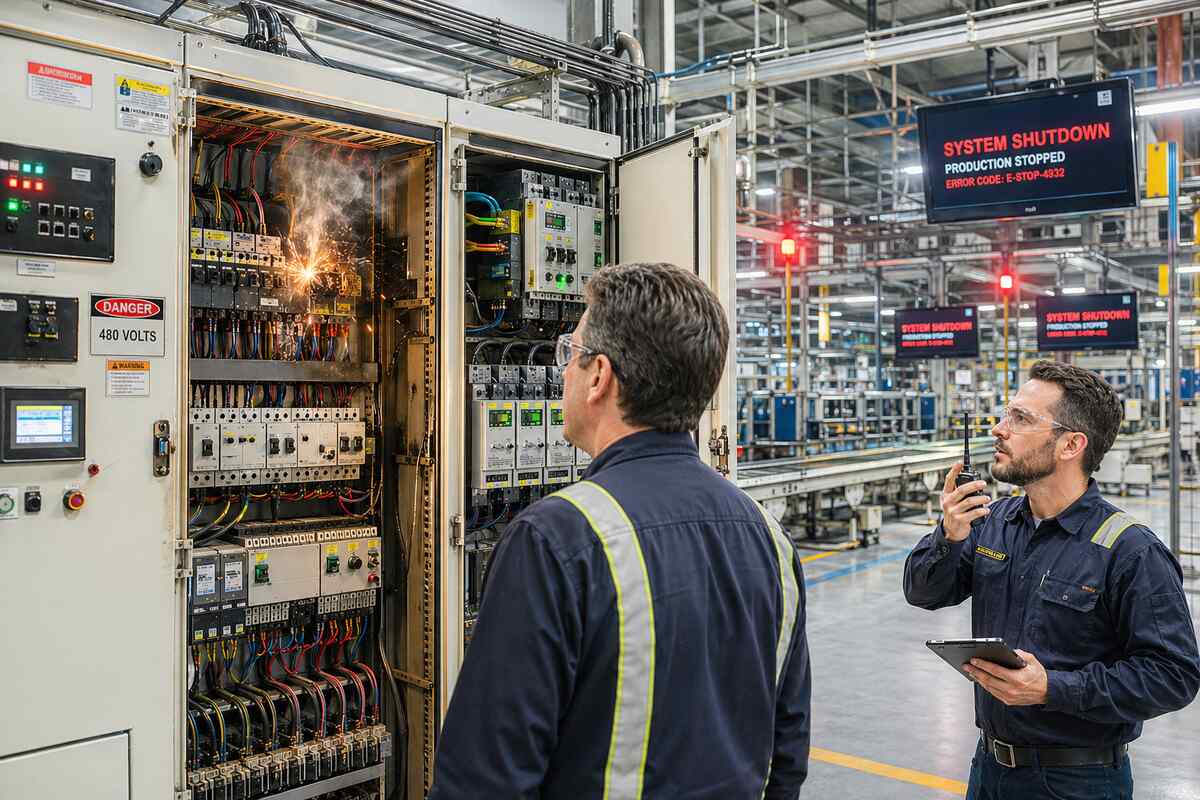
Why Electrical Panel Problems Shut Down Entire Projects
A motor failure slows you down. A panel failure stops you. That difference comes down to how industrial electrical systems are structured in real facilities.
1. Panels Sit Upstream of Everything
Electrical panels are not standalone pieces of equipment. They sit upstream of the systems that keep operations moving. A single panel may support multiple machines, entire production lines, motor control systems, safety interlocks, automation logic, or environmental controls. When a failure occurs inside that panel, everything connected downstream immediately becomes vulnerable.
The impact is rarely isolated to one function. Instead, teams lose access to multiple connected systems at the same time. What appears to be a localized electrical issue quickly becomes a broader operational problem because the panel functions as the control center for critical infrastructure throughout the facility.
2. Failures Cascade Instead of Containing
Many teams expect electrical problems to behave in a predictable way. A breaker trips, the issue gets identified, the breaker resets, and operations continue. In reality, panel failures often create chain reactions that spread stress through the system before the root problem is fully understood.
One unstable circuit can affect neighboring circuits, shift loads unexpectedly, and place additional strain on connected components. As the system attempts to compensate, secondary issues begin appearing in other areas of the operation. By the time maintenance teams isolate the original cause, multiple systems may already be experiencing instability or failure conditions. This is one reason troubleshooting panel failures often takes far longer than expected.
3. You Lose Visibility, Not Just Power
When a single machine fails independently, troubleshooting is usually straightforward because the issue remains isolated. Panel failures are different because they disrupt visibility across multiple systems simultaneously.
Facilities may experience inconsistent voltage conditions, failed control signals, interrupted automation sequences, or unpredictable equipment behavior. At that point, the problem is no longer limited to electrical distribution. It becomes an operational issue that affects diagnostics, communication, automation, and production reliability all at once.
This creates uncertainty for maintenance and operations teams. The challenge is no longer simply identifying a failed component. Teams must determine whether they are dealing with a power quality issue, a control system problem, multiple failures occurring simultaneously, or a cascading event affecting several connected systems. That uncertainty slows down troubleshooting and increases downtime pressure across the facility.
4. Troubleshooting Becomes System-Level, Not Component-Level
Electrical panel failures require system-level diagnostics rather than simple component replacement. Instead of focusing on one isolated device, technicians must evaluate incoming power conditions, inspect multiple circuits, verify control logic, and confirm that safety systems remain functional throughout the process.
This type of troubleshooting takes time because the risks are higher. Maintenance personnel are working inside critical infrastructure where mistakes can extend downtime, damage additional equipment, or create serious safety hazards. As a result, teams move carefully and methodically to avoid making the situation worse. While that process is necessary, it also means production often remains offline much longer than expected.
5. Sourcing and Replacement Delays Extend Downtime
Finding the root problem is only part of the challenge. Once the failure is identified, facilities still need to locate the correct replacement components and restore the system safely.
This is where operational problems often begin compounding. The required breaker may be discontinued, the relay may not be available locally, or the original panel configuration may include custom components that complicate replacement. Compatibility concerns become especially important in older systems where modern replacements may not match existing infrastructure directly.
Without a reliable sourcing strategy, even relatively simple repairs can turn into extended downtime events. This is a major concern for industrial facilities that depend on fast access to reliable, compatible electrical components to keep production schedules on track.
6. Safety and Compliance Slow Down Quick Fixes
Electrical panel failures cannot be treated with temporary shortcuts or rushed repairs. Every modification, replacement, or repair must meet strict safety and compliance requirements before systems can return to operation safely.
Facilities must consider NFPA and NEC requirements, follow lockout/tagout procedures, complete internal safety protocols, and verify that repaired systems operate correctly before restarting equipment. Even when the issue itself is understood quickly, the repair process still requires validation and careful execution.
This adds time to recovery, but it also prevents larger problems from developing later. Skipping proper procedures may restore temporary operation, but it increases the likelihood of repeat failures, safety incidents, or compliance violations that create even greater disruption in the future.
What This Means in Real Terms
Electrical panel failures do not simply interrupt production for a short period of time. They create a chain reaction that affects operations at multiple levels simultaneously. Systems go offline, diagnostics become more complex, troubleshooting expands across multiple circuits, sourcing delays slow recovery, and pressure builds across maintenance, operations, and management teams.
From the outside, it may look like a sudden shutdown. Inside the facility, however, the reality is far more complex. The operation has effectively lost its control center. That is why electrical panel problems rarely remain small issues. Left unresolved, they escalate quickly into project-level disruptions that affect productivity, timelines, and operational stability across the entire organization.
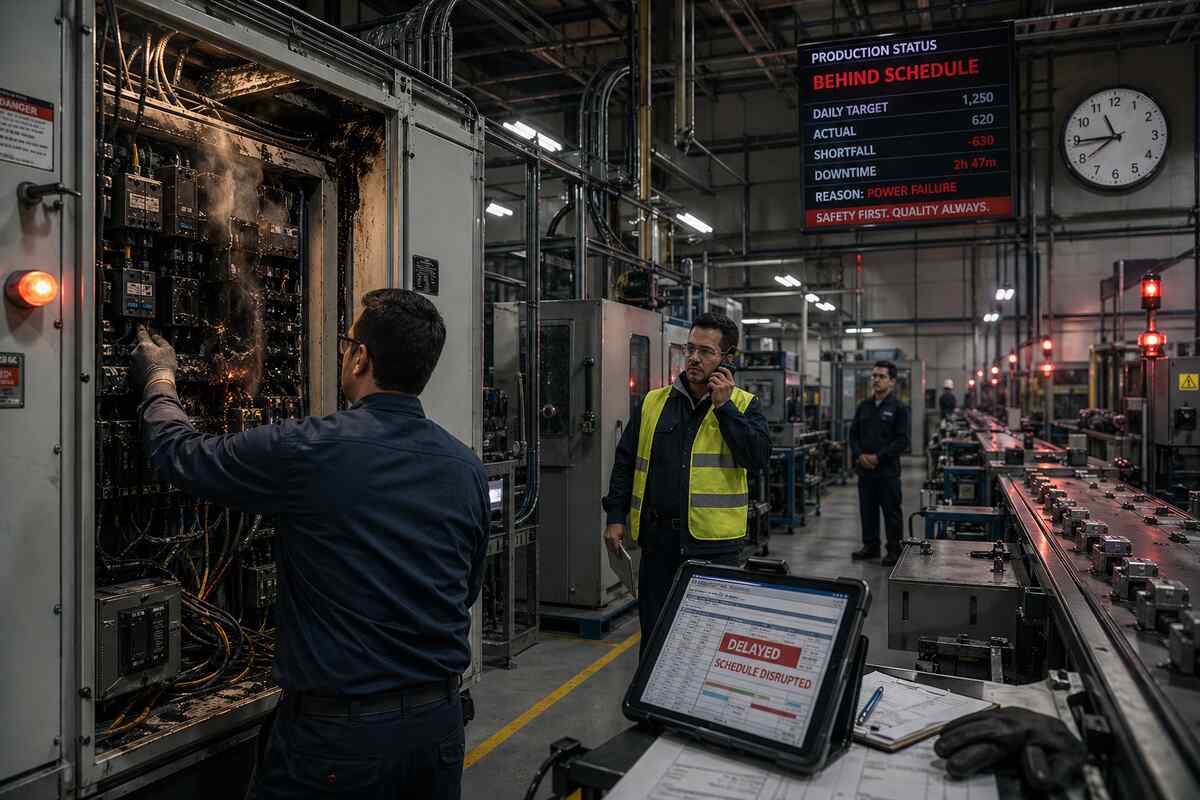
The Real Cost of Electrical Panel Failure
When a panel fails, most teams focus on the immediate problem. Get the system back online. Restore power. Resume production. But the real cost of panel failure is rarely just the repair. It builds in layers.
Direct Costs: What You See Immediately
These are the costs that show up first.
- lost production time
- idle labor and stalled operations
- emergency repair expenses
- overtime to recover lost output
If a line is down for hours, the impact is obvious. But this is only the surface.
Indirect Costs: What Happens Around the Failure
While the system is down, everything around it is affected.
- production schedules shift or collapse
- downstream processes fall behind
- delivery commitments are missed
- coordination across teams breaks down
Now the issue is no longer contained within maintenance. It starts affecting operations, logistics, and customer expectations.
Hidden Costs: What Builds Over Time
These are the costs most teams underestimate.
- repeated minor failures due to unresolved root causes
- increased wear on other systems compensating for instability
- rushed fixes that introduce long-term risk
- loss of confidence in system reliability
There’s also a human factor. When teams are constantly reacting to problems:
- decision-making becomes reactive
- preventive work gets pushed aside
- stress levels rise across maintenance and operations
Over time, this shifts a facility from controlled operation to constant firefighting.
The Cost of Downtime Is Not Linear
One hour of downtime is not just one hour lost. It often triggers:
- delayed restarts
- recalibration of systems
- material waste
- reduced efficiency after recovery
In some environments, restarting systems safely takes longer than the failure itself. That’s why downtime expands beyond the initial event.
The Accountability Pressure
The cost is not only financial. It’s a responsibility. When a panel failure shuts down operations, questions come fast:
- Why did this happen?
- Could it have been prevented?
- How do we stop it from happening again?
This is where pressure builds. Not because failure occurred, but because it disrupted everything tied to production performance. This aligns directly with what many managers deal with daily: the constant need to avoid downtime and maintain control over operations
What This Means in Practice
Electrical panel failures are expensive. But not just because something broke. They are expensive because they:
- stop multiple systems at once
- take longer to diagnose
- take longer to fix
- affect more than just maintenance
The longer the system stays down, the more those costs compound. And in many cases, the biggest loss is not the repair cost. It’s the disruption to everything that depends on that system working as expected.
How to Prevent Electrical Panel Failures
Most panel failures don’t come out of nowhere. They build slowly. Small issues stack up until the system reaches a point where it can’t handle the load, the heat, or the stress anymore. Prevention is not about reacting faster. It’s about removing the conditions that cause failure in the first place.
1. Load Analysis and Capacity Planning
One of the most common failure triggers is silent overload. Facilities grow. Equipment gets added. Demand increases. But the panel often stays the same. Over time, this creates a mismatch between:
- what the panel was designed to handle
- what the system is actually demanding
To prevent this, you need regular load evaluation. That means:
- reviewing current load distribution across circuits
- identifying imbalances or overutilized breakers
- assessing whether expansion has pushed the panel beyond safe limits
If the panel is close to capacity, you don’t wait for failure. You redesign or redistribute before it becomes a problem.
2. Preventive Maintenance That Goes Beyond Visual Checks
A quick visual inspection won’t catch most panel issues. You need methods that reveal what’s happening under load. Key practices include:
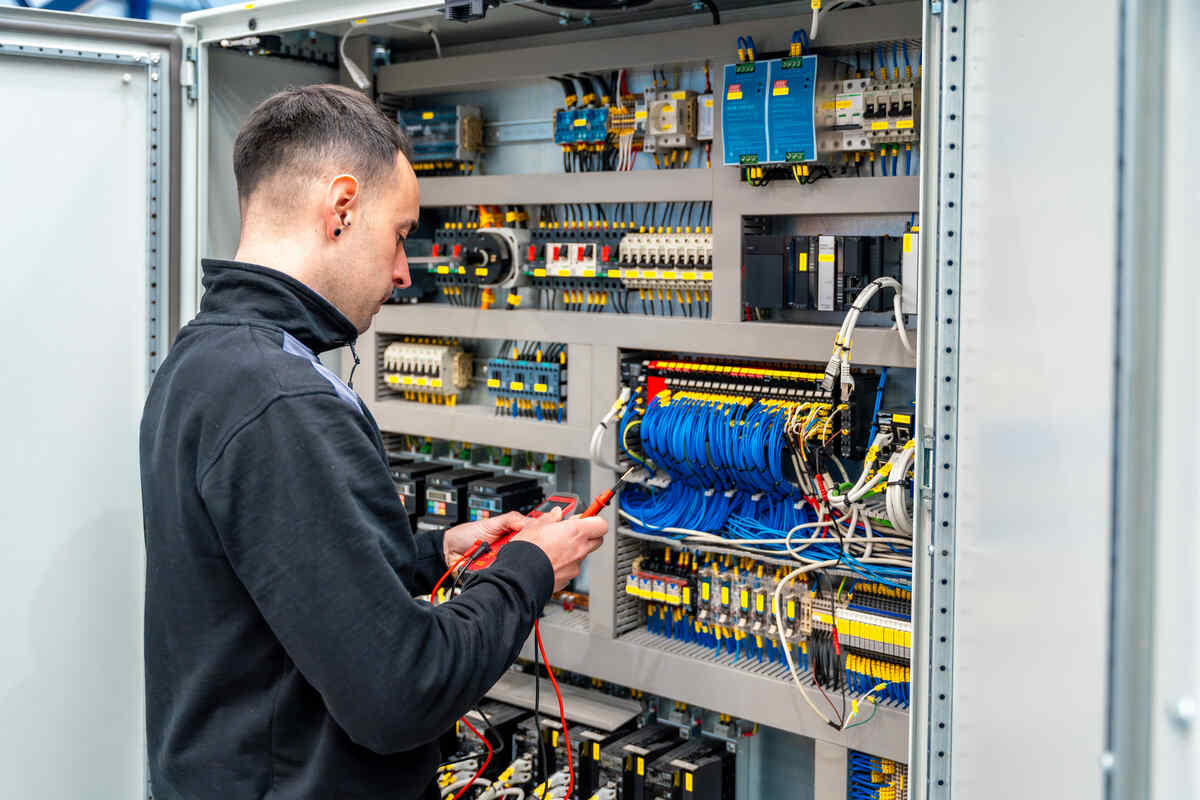
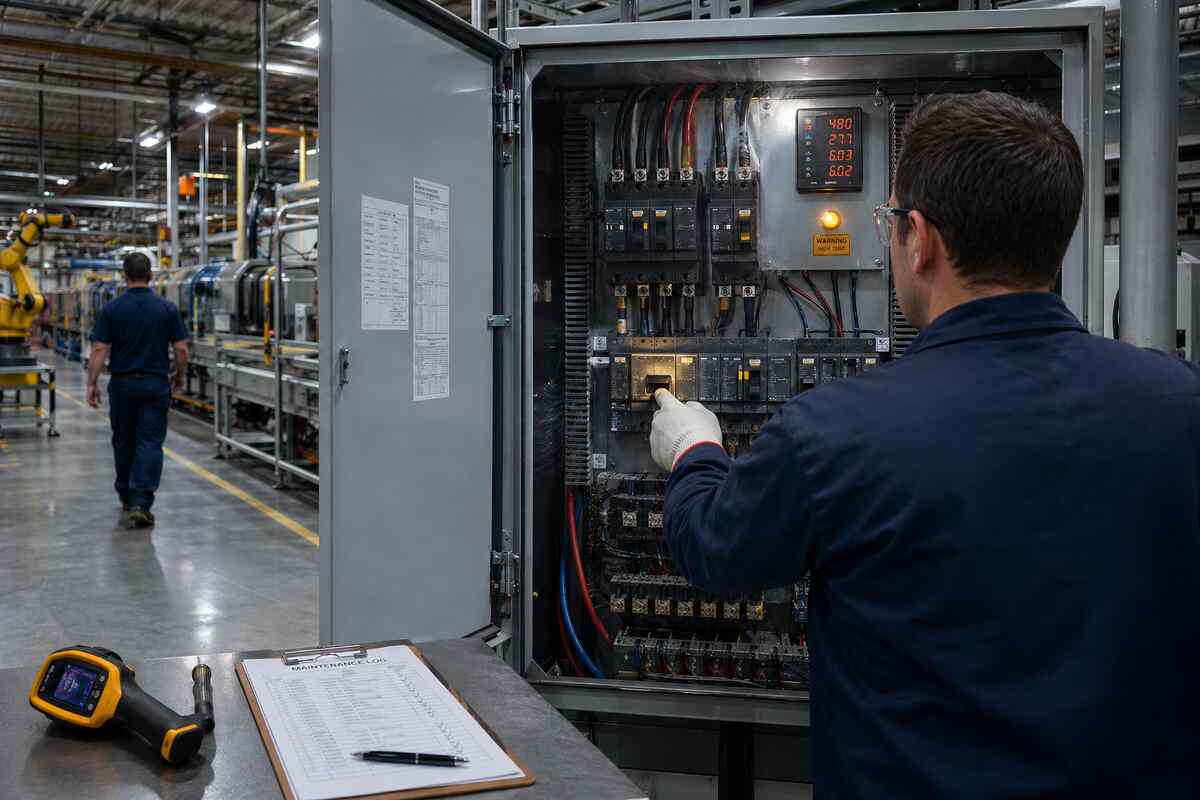
- Thermal imaging → identifies hotspots caused by resistance or overload
- Torque checks → ensures connections remain secure under vibration
- Breaker testing → verifies response times and trip accuracy
- Component inspection → checks for wear, corrosion, and degradation
This is where teams shift from reactive troubleshooting to controlled operation. Instead of asking, “What failed?” You start asking, “What’s trending toward failure?” That shift is what reduces unexpected downtime over time
3. Control the Environment Inside the Panel
Heat, dust, and moisture don’t cause immediate failure. They accelerate everything that leads to it. Inside the panel, environmental control directly impacts lifespan.
Focus on:
- proper enclosure selection (NEMA-rated for your conditions)
- ventilation or cooling where heat buildup is consistent
- sealing against dust and contaminants
- moisture control in humid environments
In many cases, standard enclosures are not enough. Custom solutions designed for your specific environment can significantly reduce long-term risk
4. Standardization and Documentation
When something fails, time matters. And time is lost when systems are unclear. Prevention includes making future troubleshooting faster and safer. That requires:
- clear labeling of circuits and components
- up-to-date schematics that reflect real configurations
- documented changes from expansions or retrofits
Without this, even a small issue turns into a long investigation, which is why electrical panel layout plays a critical role in maintenance efficiency and safety. With it, teams move faster and with more confidence.
5. Avoid Unplanned Expansion
Many panel problems are created during growth. A new machine gets added. A temporary solution becomes permanent. Over time, the panel becomes:
- overcrowded
- thermally stressed
- harder to maintain
The right approach is structured expansion. Before adding new loads:
- evaluate capacity
- assess heat impact
- confirm spacing and airflow
- redesign if necessary
Shortcuts here almost always show up later as failures.
6. Use Compatible, Verified Components
Under pressure, it’s easy to replace parts with “close enough” alternatives. That’s where long-term problems begin. Preventive strategy includes:
- using components matched to system specifications
- verifying compatibility with existing equipment
- avoiding outdated or unsupported parts when possible
This reduces the risk of inconsistent performance and hidden faults.
7. Build a Reliable Sourcing and Support Strategy
Prevention is not just technical. It’s operational. When something starts to fail, your ability to act quickly depends on:
- access to parts
- speed of delivery
- availability of technical support
Teams that rely on multiple vendors without coordination often lose time when it matters most. A better approach is working with a partner who can:
- source hard-to-find components
- provide guidance on replacements
- respond quickly during urgent situations
This reduces the gap between identifying a problem and fixing it.
What Prevention Really Looks Like
Preventing panel failure is not one action. It’s a system of decisions:
- designing for current and future load
- maintaining components before they degrade
- controlling environmental stress
- ensuring clarity and consistency in the system
- preparing for fast response when issues appear
Facilities that do this well don’t eliminate problems. They catch them early, contain them, and prevent them from escalating. That’s the difference between:
- a manageable issue
- and a full shutdown event
Common Mistakes That Make Panel Problems Worse
Panel failures rarely happen because of one major mistake. In most facilities, the real problem develops slowly through small decisions that seem harmless at the time. A breaker gets reset instead of inspected. A maintenance check gets postponed because production cannot stop. A replacement part is installed quickly to get operations running again. Individually, none of these decisions feel critical. Together, they create the conditions that lead to costly downtime, unreliable performance, and avoidable electrical failures.
Ignoring Early Warning Signs
Most electrical panels show warning signs long before a serious failure occurs. Breakers may trip occasionally, equipment may run hotter than normal, or operators may notice intermittent faults, unusual smells, or inconsistent performance. These issues are often dismissed because production is still moving and the system appears functional enough to continue operating.
The problem is that these symptoms rarely disappear on their own. They usually indicate stress building inside the electrical system. Heat continues increasing, connections degrade further, and components move closer to failure thresholds. By the time the issue becomes urgent, the damage has often spread far beyond the original problem. What could have been handled during a planned maintenance window now becomes an emergency repair situation that disrupts operations unexpectedly.
Overloading Panels Instead of Upgrading Them
This is one of the most common problems facilities face during expansion. A new machine gets added to support production goals. Then another piece of equipment is connected later. Instead of redesigning the system or upgrading panel capacity, teams continue relying on infrastructure that was never designed for the increased electrical load.
At first, everything appears to work normally. Behind the scenes, though, circuits begin operating closer to their limits. Internal temperatures rise, breakers experience repeated stress, and the entire panel operates with less margin for fluctuation or peak demand. Over time, the system reaches a point where it can no longer handle operational stress consistently. What should have been a planned infrastructure upgrade eventually turns into an unplanned shutdown.
Using “Close Enough” Replacement Parts
Downtime creates pressure, and pressure often leads to rushed decisions. When a critical component fails, maintenance teams sometimes install replacement parts that appear similar enough to get the system back online quickly. The exact component may not be available, so alternative brands, older inventory, or partially compatible parts are used instead.
In many cases, the equipment powers back up successfully, which creates the impression that the problem has been solved. But electrical systems depend on precise compatibility. Small differences in specifications, performance characteristics, or protection ratings can create instability throughout the system. Problems like nuisance tripping, uneven load handling, and inconsistent protection often appear later when the panel experiences another high-demand situation.
Delaying Maintenance to Avoid Disruption
Facilities often postpone electrical maintenance because shutting systems down feels expensive or inconvenient in the short term. Production schedules take priority, and maintenance tasks get pushed further down the list. The logic usually sounds reasonable in the moment: keep operations running now and deal with maintenance later.
The problem is that electrical systems continue aging whether maintenance is performed or not. Loose connections gradually worsen, hidden heat buildup increases, and component wear accelerates over time. Without inspections and preventive service, these issues remain invisible until the system eventually forces downtime unexpectedly. At that point, repairs are typically more disruptive, more expensive, and far more stressful than planned maintenance would have been.
Poor Documentation and Labeling
When an electrical problem occurs, response time matters. Teams need to identify circuits quickly, understand previous modifications, and isolate issues without confusion. Poor documentation slows that entire process down.
If panels are not clearly labeled or updates have not been properly documented, maintenance personnel spend valuable time tracing circuits and figuring out what they are looking at before troubleshooting can even begin. In high-pressure situations, those delays increase downtime and create additional risk during repairs. Clear labeling and organized documentation are not administrative details. They directly affect how quickly and safely problems can be resolved.
Relying on Fragmented Vendors
Many facilities source electrical components from multiple suppliers without a coordinated strategy. While this may seem manageable during normal operations, it creates major complications when something fails unexpectedly.
Different vendors may provide inconsistent specifications, varying availability, or limited technical guidance. During urgent situations, maintenance teams are left trying to identify compatible parts, compare options, and locate inventory while production remains down. The problem is no longer just repairing the panel. It becomes a sourcing issue at the exact moment speed matters most. This challenge becomes even more serious when facilities operate aging infrastructure or rely on hard-to-find components.
Treating Symptoms Instead of Root Causes
This is where many recurring electrical problems begin. A breaker trips and gets reset. A failed component gets replaced. The immediate issue disappears temporarily, so operations continue as normal. But no one investigates why the failure happened in the first place.
Without root cause analysis, the same stress remains inside the system. The underlying problem continues developing until another component fails under similar conditions. Over time, maintenance becomes reactive instead of preventive, and emergency repairs become part of normal operations. Facilities end up trapped in a cycle where the same failures repeat with increasing frequency.
What This Means in Practice
None of these mistakes look severe on their own. That is exactly why they are so common. The danger comes from how these issues compound over time. Overloaded systems, hidden heat buildup, inconsistent replacement parts, delayed maintenance, and poor sourcing practices gradually reduce reliability across the entire operation.
Facilities that avoid these mistakes are not necessarily the ones with perfect infrastructure. They are the ones that recognize warning signs early, maintain systems consistently, document changes properly, and address root causes before small issues turn into larger operational failures. In environments where downtime affects production schedules, revenue, and customer trust, that level of control matters.
Control the Panel, Control the Outcome
Electrical panel problems rarely begin as major failures. They start small, often unnoticed, building through heat, load imbalance, aging components, or overlooked maintenance until the system reaches a point where it can no longer hold together. When that moment comes, the impact is immediate and wide. Production stops, troubleshooting becomes complex, and what should have been a contained issue turns into a full operational disruption. The difference between facilities that struggle with repeated downtime and those that run consistently is not luck. It comes down to how well panels are designed, maintained, and supported over time. When you treat the panel as the control center it is, you gain stability, predictability, and control over your operation. When you don’t, small problems escalate into costly shutdowns.
If you are evaluating your current setup or planning an upgrade, it is worth taking a closer look at how your electrical panels are built and supported. Electrical Power and Control works with industrial and commercial teams to design and deliver custom electrical panels tailored to real operating conditions, helping reduce risk and improve long-term reliability.