Before You Buy Another Circuit Breaker, Read This First
Let’s be honest—most people don’t think twice when it’s time to replace a circuit breaker. You check the specs, grab what seems right, and move on. But here’s the truth: picking the wrong breaker can lead to much more than an inconvenient delay. It can put your equipment at risk, set back timelines, and even cause a safety issue no one saw coming.
In industrial environments—where downtime costs money by the minute, and compliance is non-negotiable—the decision you make at the breaker box matters. Whether you’re managing a high-demand facility or juggling project deadlines as a contractor, the last thing you need is a mismatch that could’ve been avoided.
That’s why we created this industrial circuit breaker buying guide. You won’t find sales fluff or generic advice here. Just straight answers from people who’ve spent decades helping professionals choose the right components the first time.
This guide will help you:
- Understand the different types of circuit breakers and where they’re used
- Know exactly what to look for when evaluating specs, sizing, and compatibility
- Avoid common mistakes that cause installation delays or safety issues
- Make confident decisions that protect your people, your equipment, and your time
Whether you’re troubleshooting an aging panel or selecting gear for a brand-new build, this article gives you the insights you need to move forward with clarity.
Let’s dive in.
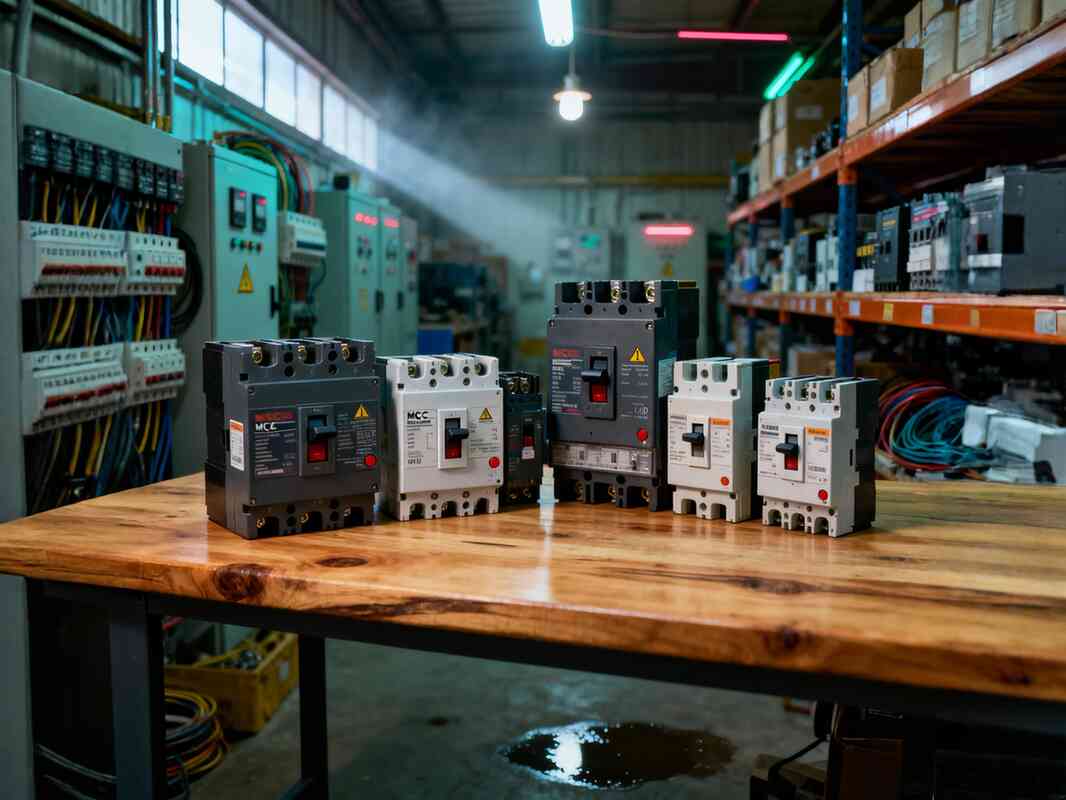
What Is a Circuit Breaker and Why Does It Matter More Than You Think
At its core, a circuit breaker is a safety device. It’s designed to interrupt the flow of electrical current when something goes wrong—like a short circuit, an overload, or a ground fault. But in industrial and commercial settings, it’s more than just a safety measure. It’s your first line of defense against equipment damage, downtime, and costly failures.
Think of it like this:
If your electrical system is the heart of your facility, the circuit breaker is the muscle that keeps that heart from overexerting itself. It steps in before things go critical.
Why It’s Not Just a “Swap-and-Go” Part
We’ve seen it too often: a contractor replaces a breaker with “whatever was on the shelf,” or a facility team installs a unit that “should be close enough.” Sometimes it works. Other times? It ends in delays, failed inspections, or worse—an unplanned shutdown that could have been avoided.
Choosing the wrong breaker isn’t just a mismatch in hardware—it’s a mismatch in risk tolerance. The higher the stakes (think 24/7 manufacturing, hospitals, mission-critical infrastructure), the less room you have for guesswork.
Circuit Breakers Do More Than Break Circuits
In industrial environments, breakers have to do a lot:
- Protect people from electrical hazards
- Protect equipment from overcurrents or faults
- Isolate faults to prevent cascading failures
- Comply with safety codes (UL, IEC, NEC standards)
- Maintain uptime and operational continuity
And they have to do it all reliably, over and over again, often in challenging conditions—dust, vibration, moisture, heat.
So yes, a circuit breaker is a safety device. But in your world, it’s also a decision point that affects compliance, performance, and reputation.
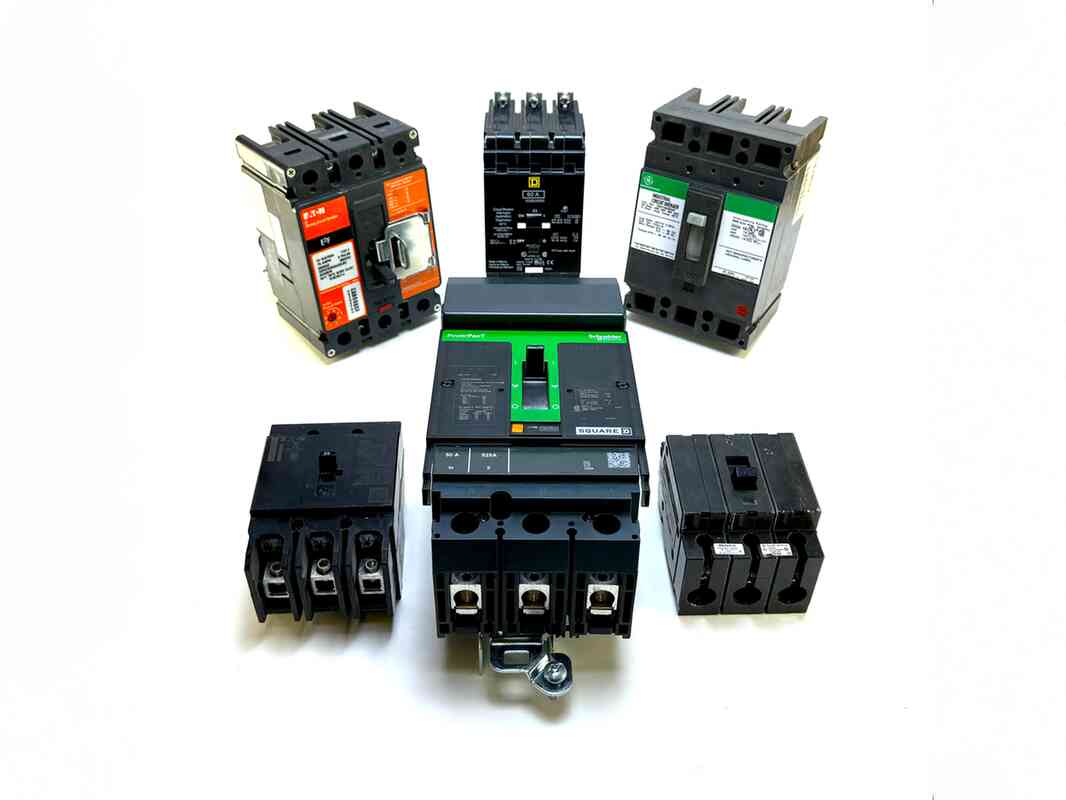
Types of Circuit Breakers: Matching the Right Tool to the Job
Choosing a circuit breaker isn’t a one-size-fits-all decision—especially in industrial and commercial environments. The right choice depends on voltage levels, fault conditions, equipment load, and application-specific demands. A mismatch doesn’t just waste money—it can delay projects, compromise safety, or trigger system-wide failures.
This section will walk you through the main categories you need to understand for smarter industrial circuit breaker selection.
Low Voltage Circuit Breakers (LV)
Used in: Commercial buildings, light industrial plants, panelboards, and switchgear systems.
- MCB (Miniature Circuit Breaker)
Protects against overloads and short circuits, typically up to 100A. Common in residential and small-scale commercial applications. - MCCB (Molded Case Circuit Breaker)
Offers adjustable trip settings and handles higher currents (up to 2,500A). Widely used in industrial applications for motor protection and feeder circuits. - RCD/GFCI (Residual Current Devices / Ground Fault Circuit Interrupters)
Detect leakage currents and prevent electrocution risks—especially important in wet or outdoor environments.
When to use: For most facility-level branch circuits or control panels where compact size and fast reaction are critical.
Medium Voltage Circuit Breakers (MV)
Used in: Substations, large-scale industrial facilities, utilities.
- Typically handle voltages from 1kV to 72kV.
- Often air-insulated or vacuum-insulated.
- Provide system-wide protection and fault isolation.
When to use: If you’re working on infrastructure-level distribution or operating industrial motors and drives in the thousands of horsepower range.
High Voltage Circuit Breakers (HV)
Used in: Utility transmission, heavy industrial manufacturing, and large-scale infrastructure.
- Operate at voltages above 72.5kV
- Technologies include SF₆ (gas-insulated), vacuum, and oil circuit breakers
- Require complex safety, cooling, and maintenance protocols
When to use: For major transmission lines and grid-level fault isolation, where interruption capacity must be incredibly high.
Specialty Breakers
These are often overlooked but critical for specific scenarios:
- AFCI (Arc Fault Circuit Interrupter): Protects against arc faults—ideal for older buildings or environments with fluctuating loads
- DC Circuit Breakers: Required in solar, battery storage, and EV infrastructure
- Smart Breakers: Offer remote monitoring, predictive maintenance, and integration with SCADA or building automation systems
When to use: When code compliance, evolving tech, or application-specific needs (like clean energy systems) are at play.
Why Knowing the Difference Matters
If you’re an electrical contractor bidding on a job or a facility manager planning a retrofit, selecting the wrong type can lead to:
- Costly redesigns
- Failed inspections
- Equipment that doesn’t meet performance requirements
- Safety violations
When you understand the types of circuit breakers and what they’re designed for, you turn a risky guess into a confident, strategic decision.
How to Choose the Right Circuit Breaker (A Real-World Buying Guide)
What to look for, what to avoid, and how to make confident decisions that hold up in the field.
Let’s face it—if you’re sourcing a circuit breaker for a facility, a retrofit project, or a control panel upgrade, the margin for error is slim. It’s not just about finding a breaker that fits. It’s about finding the right breaker for the application, one that meets code, matches load, and holds up under pressure.
This section breaks down a step-by-step circuit breaker buying guide based on what we’ve seen go right—and wrong—in the field.
Define the Application (Don’t Assume One Size Fits All)
Your starting point should always be:
“What is this breaker protecting, and where is it being installed?”
Key considerations:
- Environment: Clean indoor panel, outdoor weather exposure, high-heat area?
- Voltage system: 120V? 480V? Medium-voltage?
- Phase: Single-phase or three-phase?
- Criticality: Is it backing up essential machinery or backup generators?
Real talk: We’ve had contractors try to repurpose residential breakers for commercial gear. It never ends well. Know the stakes.
Match the Ratings to the Load
This is where specs matter—and where mistakes often happen.
Key Ratings to Check:
- Voltage rating: Must match or exceed the system voltage
- Current rating (Amps): Based on the continuous load
- Interrupting capacity (IC): Must be high enough to safely stop a fault
- Frequency: 50 Hz vs. 60 Hz (especially important for global operations)
- Trip curve or time-current characteristic: Affects how fast the breaker responds
Industrial circuit breaker selection tip: If you’re protecting motors or variable frequency drives (VFDs), look closely at trip characteristics. You want protection without nuisance tripping.
Consider Compatibility and Panel Fit
Even if the specs match, not all breakers are cross-compatible.
- Check busbar spacing, mounting type, and connection style
- Use only listed or approved replacements for your panel brand
- When in doubt, verify with the panelboard’s UL listing or spec sheet
Procurement tip: If you’re managing multiple installs, it’s worth working with a supplier who can verify compatibility for you—before the wrong part shows up at the jobsite.
Think Beyond Today’s Load
Don’t buy for just today—buy for what’s next.
- Will you add more equipment to this circuit later?
- Is the breaker feeding a system that’s being upgraded in the next 6–12 months?
- Should you build in headroom to avoid replacing the entire panel?
Choosing a breaker with some expansion flexibility now can save major time and cost later.
Know the Code and Compliance Standards
Breakers aren’t just equipment—they’re regulated safety components.
Here’s what your circuit breaker buying guide must account for:
- UL (Underwriters Laboratories) listings
- NEC (National Electrical Code) compliance
- IEC standards, if you’re sourcing internationally
- OSHA requirements for workplace safety
- Arc flash ratings, if applicable
Pro tip: Industrial facility managers should review breaker specs as part of their annual safety inspections or insurance risk assessments. It pays off.
Confirm Availability and Lead Times
Even if you’ve found the perfect breaker, it won’t help you if it’s backordered for 12 weeks.
- Confirm in-stock status
- Ask for alternatives that meet the same specs
- For urgent projects, partner with a supplier who has flexible sourcing options or can provide emergency support
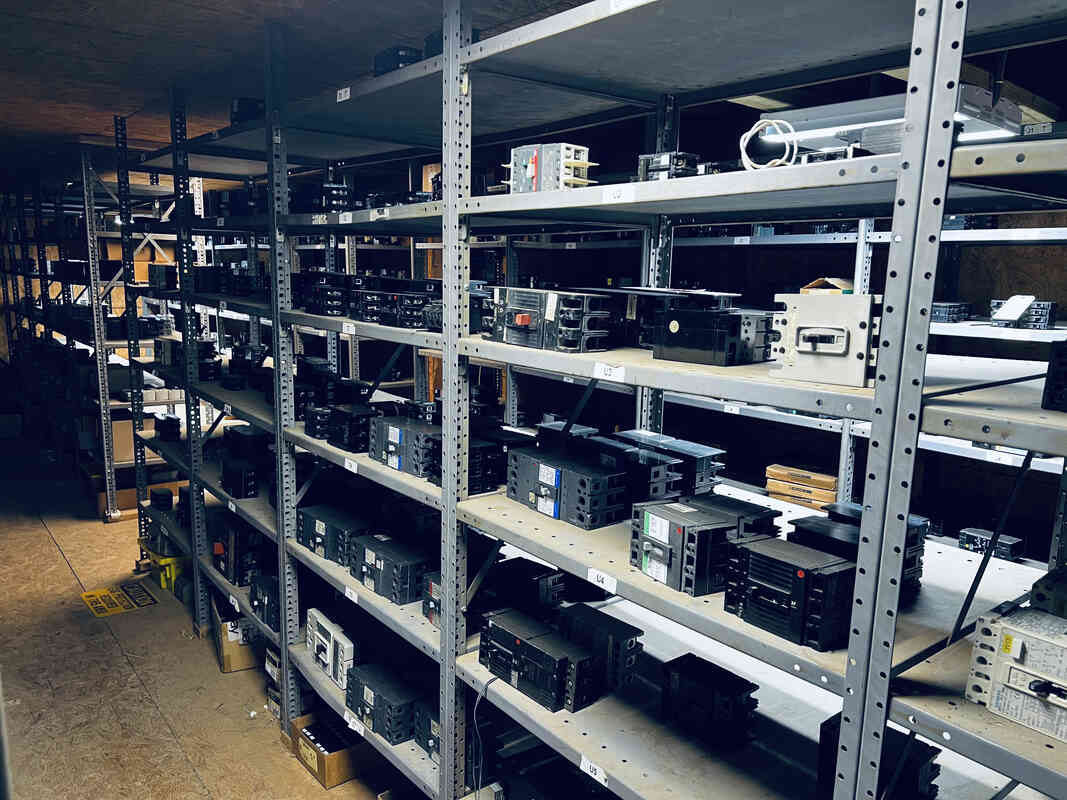
At EPC, we specialize in fast-turnaround sourcing for hard-to-find or obsolete breakers. It’s one of the ways we help contractors and facility teams avoid unnecessary downtime.
Quick Field Checklist: Did You Pick the Right Breaker?
Before you sign off or submit that PO, run through this:
- Does the breaker match the correct voltage and amperage?
- Is the interrupt rating high enough for your fault current?
- Does it fit the panel or enclosure you’re using—physically and legally?
- Did you verify UL or IEC compliance for your region?
- Will it hold up in this environment—heat, dust, moisture, vibration?
- Is it in stock—or are you looking at a 6-week delay?
- Does this breaker give you room to grow down the line?
Pro tip: If you had to guess on any of these, call your supplier before you commit.

Compliance, Safety, and Regulatory Considerations
What the Code Doesn’t Say Can Still Shut You Down
You can spec the perfect breaker, get it delivered on time, and install it clean—but if it doesn’t meet code or regulatory standards, you’re still at risk.
In industrial and commercial settings, compliance isn’t optional—it’s survival. Whether it’s for safety inspections, insurance audits, or passing final approval on a project, every circuit breaker you buy needs to meet the right standards, in the right way, for the right environment.
Let’s break down what that actually means.
UL and IEC Listings: The First Checkpoint
UL (Underwriters Laboratories) and IEC (International Electrotechnical Commission) certifications are not just badges—they’re your first layer of proof that a breaker is tested and safe.
- UL listings are critical in the U.S. They confirm that the breaker meets national safety standards and can be legally installed in code-compliant systems.
- IEC certifications often apply in global or export projects, especially in European-standard facilities or when working with international OEMs.
Using an unlisted or uncertified breaker can invalidate insurance policies, trigger inspection failures, and—if something goes wrong—open up liability you don’t want.
National Electrical Code (NEC) Requirements
The NEC is the electrical industry’s rulebook. It covers everything from panel layout to breaker sizing, grounding, and fault protection. Here’s how it ties into breaker selection:
- Breaker sizing must match the conductor and load
- Interrupting ratings must be sufficient for the available fault current
- Breaker placement must allow for safe operation and maintenance
- Arc energy reduction may be required in systems over 1,200 amps
Ignoring NEC rules—even unintentionally—can result in rework, red tags, or worst-case, unsafe conditions for your team.
OSHA and Workplace Safety Regulations
If you’re in a manufacturing facility, distribution center, or any workplace where people are exposed to live electrical equipment, OSHA standards apply.
Key OSHA-relevant topics:
- Lockout/tagout procedures (breakers must support safe isolation)
- Overcurrent protection for machinery and personnel safety
- Arc flash labeling and mitigation requirements
- Routine inspection and documentation of critical protection systems
Hint: OSHA violations for electrical safety can cost thousands per incident.
Industry-Specific Codes and Client Requirements
Some projects come with an extra layer: client specs, engineering firm requirements, or industry-specific codes (think food processing, healthcare, oil & gas).
You may need:
- Breakers rated for washdown environments
- Hazardous location (Class I, Div 1/2) approvals
- Remote trip features for high-voltage installations
- Environmental durability (NEMA ratings, IP codes)
The takeaway? Not all compliance is black-and-white. A breaker that’s technically “legal” might still fall short of what the job or facility actually requires.
How EPC Helps You Stay in the Clear
We’ve seen what happens when compliance is an afterthought:
- Projects delayed by failed inspections
- Panels were rebuilt because the wrong breaker was installed
- Operations halted during surprise audits
At Electrical Power and Control, we’ve built our service around getting this part right the first time.
- We verify UL and IEC certifications before we quote
- We help match NEC-compliant solutions to your specs
- We can recommend arc flash-rated options, smart safety features, and more
- And we support you with documentation, spec sheets, and guidance—no gatekeeping
Because when it comes to safety and code, there’s no such thing as “close enough.”
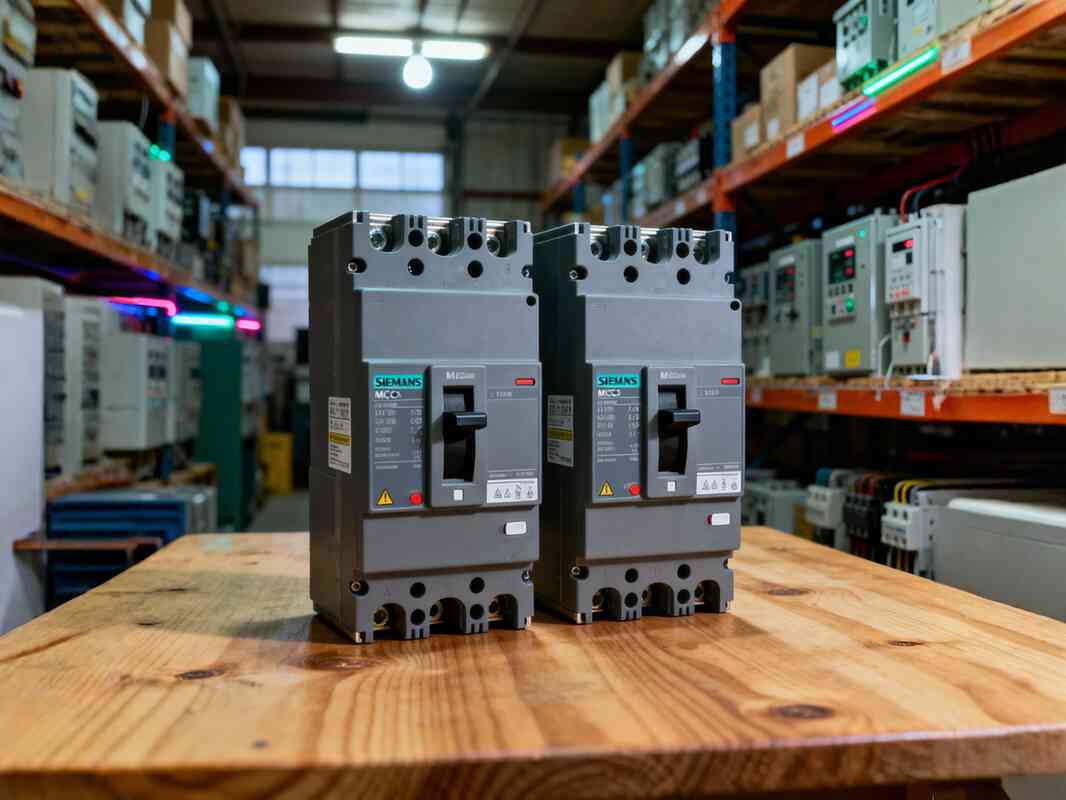
Common Pitfalls to Avoid When Buying a Circuit Breaker
These mistakes cost time, money, and credibility — here’s how to steer clear of them.
Even experienced professionals fall into traps when selecting circuit breakers. Sometimes it’s due to pressure to finish a job fast. Sometimes it’s a spec sheet oversight. Sometimes it’s just assuming that “close enough” is good enough.
But in this industry, “almost right” can mean downtime, inspection failures, or even equipment damage.
Here are the most common missteps we’ve seen in the field — and how to avoid making them yourself.
Assuming All Breakers Are Cross-Compatible
Just because a breaker fits physically doesn’t mean it’s compatible electrically — or code-compliant.
- Different brands often use unique busbar spacing or connection terminals
- UL listings usually don’t allow mixing and matching without specific approval
- Retrofitting with off-brand or “similar” parts may void warranties or certifications
Pro Tip: Always confirm with the panelboard manufacturer or a knowledgeable supplier before substituting.
Underestimating the Importance of Interrupting Capacity
The breaker may match your voltage and amperage — but can it actually interrupt a fault?
If the available fault current at your site is higher than the breaker’s interrupt rating, you’re risking catastrophic failure.
- Especially critical in industrial settings with large transformers, generators, or backup systems
- Not always obvious unless you calculate or request a fault current study
Pro Tip: If you don’t know your system’s fault level, don’t guess. Ask your engineering team or consult with EPC.
Ignoring Environmental and Application Conditions
Industrial environments aren’t kind to electronics. Think: heat, vibration, humidity, dust, corrosive chemicals.
Choosing a standard breaker for a harsh environment can lead to:
- Premature tripping
- Corrosion and contact wear
- Complete failure under load
Pro Tip: Match your breaker to the real-world conditions, not just the system specs. Look for NEMA ratings or application-specific certifications.
Ordering Based on Old or Incomplete Specs
It happens all the time: someone copies the last PO and orders the same part… even though the system was upgraded last quarter.
If the load has changed — or the panel was modified — your old breaker might now be the wrong one.
Pro Tip: Treat every breaker order as a new decision, not a repeat. Always check the load and verify the system hasn’t evolved.
Failing to Plan for Lead Times
The breaker you need might not be sitting on a shelf.
- Specialized or high-interrupt breakers often have 6–12 week lead times
- International shipments can add delays
- Supply chain disruptions still impact legacy product lines
Pro Tip: If you’re dealing with a tight deadline, call a supplier who can check stock in real time — or offer a compliant alternative.
Skipping Documentation and Traceability
Even if the breaker works perfectly, a lack of documentation can come back to bite you:
- Can’t prove UL compliance? Inspection may fail.
- Missing spec sheets? Your maintenance team may install a bad replacement next time.
- Can’t show purchase traceability? Could void warranty support down the line.
Pro Tip: Partner with a supplier who delivers full documentation with every shipment — and stores it for future reference.
Whether you’re managing a 40,000 sq. ft. facility or a fast-moving jobsite, avoiding these pitfalls can be the difference between smooth operations and a very expensive phone call.
At EPC, we don’t just ship parts. We help clients avoid mistakes they didn’t even know they were about to make. Because the best kind of fix is the one you never have to make at all.
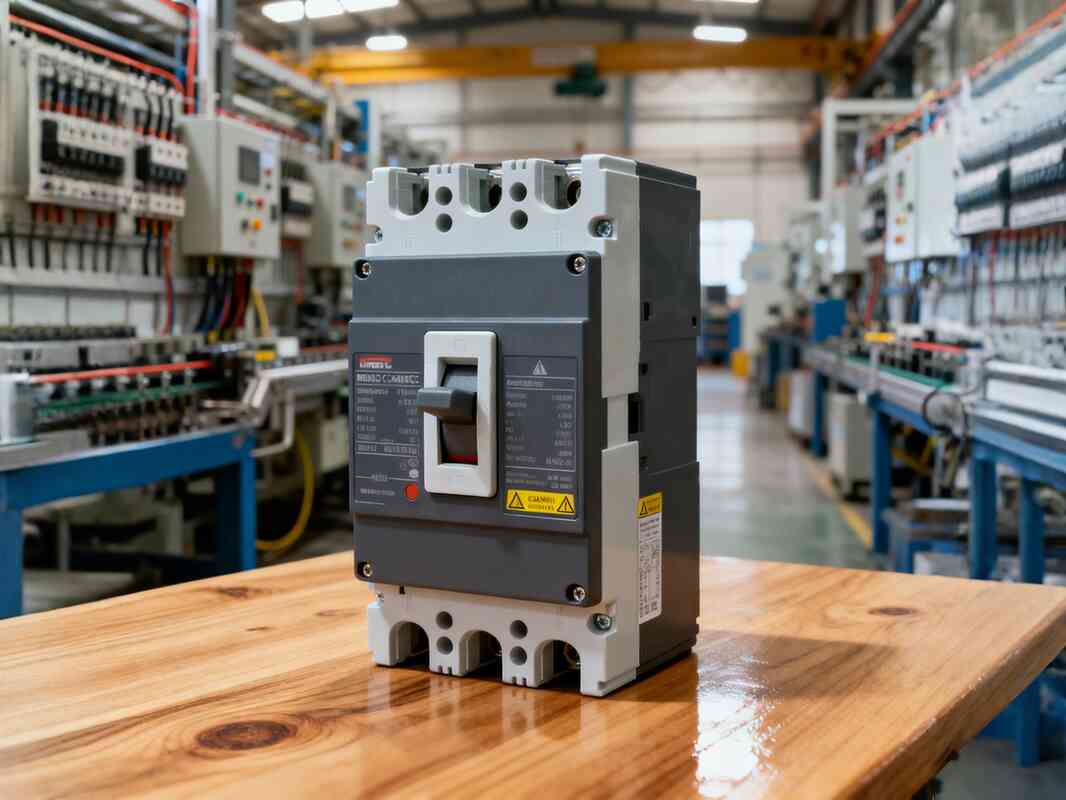
What’s Changing in the Circuit Breaker World?
Smarter systems, tighter standards, and a shift toward predictive everything.
If you haven’t shopped for circuit breakers in the last few years, it might surprise you how fast things are evolving. Breakers are no longer just “dumb switches” sitting in a panel. Today, they’re becoming smarter, more connected, and increasingly integrated with the broader demands of safety, sustainability, and system visibility.
Here’s what’s trending— and what it means for your next purchase.
Smart Circuit Breakers Are (Quietly) Taking Over
In the past, you’d flip a breaker and hope for the best. Today? Breakers can talk.
Smart breakers now offer:
- Real-time load monitoring
- Remote reset and trip diagnostics
- Predictive maintenance alerts based on actual conditions
- Integration with SCADA, PLCs, and building automation systems
These are especially valuable in industrial and high-demand environments, where visibility and uptime go hand in hand.
Trend Insight: As facilities get leaner and teams are stretched thinner, smart components help catch issues before they become problems.
Safety Standards Are Tightening — Especially Around Arc Flash
Electrical safety has always been a priority, but the bar keeps rising.
- The NEC and NFPA 70E continue to push for better arc flash mitigation
- Zone-selective interlocking and energy-reducing maintenance switches are now expected in more systems
- Facilities are under increasing pressure to document — and actively reduce — arc energy risks
Real-World Impact: If you’re using outdated breakers in high-energy environments, you may be out of compliance (or at risk for much worse).
The Push for Energy Efficiency Is Reaching the Panel
Your breaker might not seem like an energy-saving device, but it plays a role.
- Breaker monitoring data helps optimize load balancing
- Smarter switching can reduce phantom loads
- Some facilities now require breakers that meet sustainability benchmarks for LEED or green building certifications
Sustainability Angle: Especially for large plants and campuses, smarter load management through breakers = real cost savings over time.
Renewables and DC Power Are Reshaping Requirements
As solar, battery storage, and EV charging expand, so does the need for DC-compatible circuit breakers.
- Traditional AC breakers won’t work for many DC applications
- Fast-acting DC breakers are now in higher demand
- Some systems require bidirectional protection for energy flows
If you’re managing microgrids or clean energy installations, expect your breaker needs to shift accordingly.
Customization and “Fast-Spec” Solutions Are the New Normal
Gone are the days of waiting 14 weeks for a specialty breaker to arrive — at least, they should be.
In 2025:
- Contractors expect fast access to custom-rated or pre-configured breakers
- Facility managers want off-the-shelf compatibility that doesn’t require reengineering
- Suppliers who can source, spec, and ship quickly are the ones you call again
Breakers are getting smarter. Safer. More integrated. And while the basics still matter — voltage, amps, interrupt ratings — the decisions you make now set the tone for how adaptable your systems will be in the years ahead.
If you’re still buying breakers like it’s 2015, you’re missing out on tools that can make your job easier, your system safer, and your team better prepared.
EPC’s Expert Tips for Industrial Circuit Breaker Selection
25+ years of lessons from the field — in one cheat sheet.
We’ve worked with electrical contractors, facility managers, and system integrators long enough to spot the patterns. We’ve seen what leads to seamless installs — and what leads to costly callbacks.
Here are a few hard-earned tips from our team that can save you time, stress, and second-guessing on your next industrial circuit breaker selection.
Don’t Spec in a Vacuum — Think About the Whole System
It’s easy to zero in on amps, volts, and trip curves. But if the breaker isn’t compatible with the panel, enclosure, or the broader system architecture, you’re setting yourself up for delays.
EPC Tip: Before quoting, we always ask about the gear brand, load type, and environment — not just the model number.
Document Everything (Even the Small Stuff)
You’d be surprised how many projects hit a wall because a simple spec sheet or compliance cert wasn’t filed. Months later, no one remembers which breaker went where.
EPC Tip: We provide documentation with every order — and keep records so you can always trace what went into what, years down the line.
Consider Your Load Profile Over Time — Not Just Today
A lot of breakers are installed to match the current load… and replaced when that load changes. That’s avoidable.
EPC Tip: When we help spec breakers, we ask about future expansion plans. It often means the difference between one breaker now and two trips to the panel later.
When in Doubt, Don’t Guess — Ask
There’s no shame in asking a question. In fact, the smartest teams do it more often. Guessing on spec or compatibility leads to returns, failures, or fines.
EPC Tip: Our team is available to confirm fit, source alternates, or flag compatibility issues. No pressure. No jargon. Just help.
Fast Shipping Means Nothing Without the Right Part
Speed matters — but accuracy matters more. A breaker that shows up fast but doesn’t fit your system just slows you down in a different way.
EPC Tip: We balance urgency with precision. That means double-checking the specs and ensuring the right solution ships the first time.
Build a Relationship with a Supplier Who Actually Knows the Work
You don’t need a warehouse. You need a partner. Someone who understands the stakes, the codes, and the realities of your projects.
EPC Tip: We don’t sell on volume — we build relationships. That’s how we’ve stayed in business for over two decades: by having our customers’ backs.
Conclusion
Choosing the right circuit breaker might seem like a small decision, but in reality, it’s one of the most critical calls you’ll make when it comes to protecting your equipment, your people, and your bottom line. Whether you’re replacing a single unit or planning out a full facility upgrade, the stakes are too high for trial and error.
In this guide, we’ve walked through what circuit breakers really do, the different types available, how to select the right one, and the pitfalls that can derail even experienced professionals. We’ve also looked at how compliance, technology trends, and real-world field conditions all shape the choices that electrical contractors and facility managers make every day.
If there’s one thing we hope you take away from this, you don’t have to make these decisions alone. At Electrical Power and Control, we’ve spent over 25 years helping clients find the right solution the first time. We don’t just ship components — we help you avoid mistakes, minimize downtime, and keep your operation moving with confidence. If you’re ready to stop guessing and start sourcing with clarity, we’re here for you. Call us directly at 205-812-5402, or explore our current selection of circuit breakers online.
Let’s solve it together.